
How Tuta absoluta Reshaped the Tomato Industry of South Africa
A decade after the tomato leafminer crossed South Africa’s northern border, national supply looks stable — but yield per hectare, post-harvest losses and the number of viable growers tell a very different story.
When the tomato leafminer, Phthorimaea absoluta (synonymous with Tuta absoluta), first breached the northern borders of South Africa in August 2016, entomologists recognised an immediate biological invasion threat. Due to its high fecundity, short generation cycles, and rapid development of resistance, its establishment posed severe risks to Solanaceous crop production. Fields extending from the Musina border corridors in Limpopo Province to irrigation hubs in Gauteng experienced swift foliage destruction, signalling the start of a complex ecological challenge.
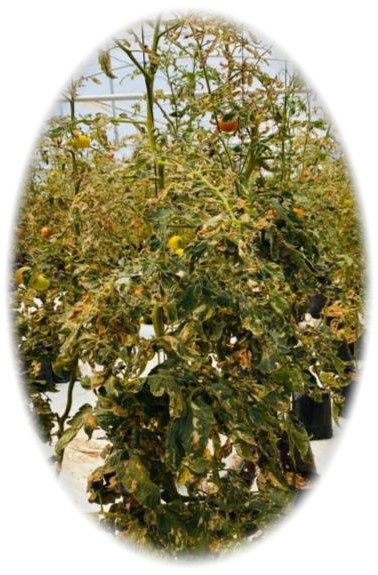
A decade post-detection, aggregated market volume and quality metrics suggest a return to baseline stability. To an outside observer, the pest appears suppressed. However, entomological field evaluations and biological monitoring data reveal a more intricate reality — an agricultural landscape defined by severe macro yield suppression, persistent post-harvest losses, and aggressive sector consolidation.
A yield decline masked by land expansion
Historical field evaluations confirm that average yield efficiency per hectare across the South African tomato industry has been suppressed since the initial 2016 infestation. While total national supply appears stable on the surface, this equilibrium is maintained almost entirely through land expansion and high-density planting by major commercial operations. Across the broader sector, net yield per hectare — particularly among small- to medium-scale growers — has experienced a persistent downward trend.
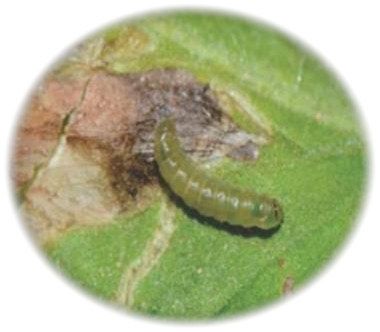
This yield decline stems directly from the unique feeding pathology of P. absoluta larvae. That biological disruption explains a key statistical anomaly in recent field data: a narrowing gap between total production area harvested and final marketable yield.
The damage that only surfaces after harvest
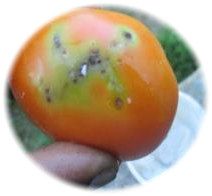
While producers may successfully plant, manage, and harvest an entire crop, the economic toll becomes fully visible only after harvest. The tiny entry punctures created by larvae burrowing into the fruit allow opportunistic fungi and bacteria to trigger rapid post-harvest rot. Consequently, when tomatoes arrive at packhouses or municipal fresh produce markets, quality inspectors enforce strict sanitary measures that result in the outright rejection of partially damaged consignments.
Key performance and yield disparity
Marketable tomato yield by production context · tonnes per hectare
Intensive commercial
~96 t/haAverage marketable yield under intensive management regimes.
Constrained producers
below 15 t/haMarketable yields frequently drop below this level.
Smallholders in outbreak
5 or less t/haYield during severe pest outbreaks.
The gap between the top and bottom of this range is the clearest measure of how unevenly the pest burden falls across the sector.
Consolidation as a second-order effect
Combining pest management expenditures, high packhouse rejection rates, and severe yield instability has forced many low- and medium-input producers to scale back or suspend tomato cultivation entirely, transitioning toward crops with lower biosecurity risks. This pest-driven pressure has significantly accelerated production consolidation within the sector: data from agricultural monitoring bodies indicate that major capitalised commercial clusters, primarily concentrated in Limpopo, now supply approximately 95% of commercial tomato volumes across the country.
While this centralisation maintains consistent volume for major urban retail networks, it drastically reduces regional crop diversity and eliminates scaling opportunities for smaller growers unable to absorb the biological and financial costs of invasive pest pressure.
Although national production figures mask the impact through commercial scale and land expansion, the underlying reality is an industry fundamentally restructured by persistent yield suppression, strict market rejection standards, and extreme commercial centralisation.
Closing the gap through practical extension training
To counter this growing centralisation and protect resource-constrained growers, the industry must prioritise targeted, practical extension workshops that bridge the technology and resource gap. Hands-on threshold-management training for extension officers and smallholders should deliver field instruction on:
- Interpreting pheromone trap data to establish real action thresholds.
- Accurately timing spray windows to the vulnerable early larval stages.
- Preserving natural biological predators such as Nesidiocoris tenuis.
- Identifying early post-harvest entry punctures before market transport.
By connecting academic research directly to field-level practice through accessible workshops, South Africa can build systemic agricultural resilience and restore viable growth pathways for tomato growers of all scales.
Includes the original field photographs and figures.